There is no fixed daily list. A useful supplement has a defined job: meeting an Australian life-stage recommendation, correcting a confirmed shortfall, covering a restrictive eating pattern or supporting a need identified with a qualified health professional. Age or gender alone does not prove that someone needs a capsule.
Women’s nutritional needs change with menstruation, pregnancy, breastfeeding, menopause, diet, health conditions and medicines. Start with food, then identify the gap. This guide explains how to make that decision without turning normal life stages or non-specific symptoms into a diagnosis.
Safety note: Seek clinical advice before using supplements if you are pregnant or breastfeeding, have kidney, liver, thyroid or gastrointestinal disease, take prescription medicines, have unexplained bleeding or fatigue, or are preparing for surgery. Do not use supplements to delay assessment of persistent symptoms.
Evidence checked: 19 July 2026
Supplement choices start with life stage
Australian dietary guidance is food based: eat a variety from the five food groups in amounts suited to your needs.[1] That pattern supplies fibre, protein and many vitamins and minerals together. A supplement can help fill nutritional gaps, but it cannot reproduce the overall eating pattern or automatically improve overall health.
Use four questions before choosing anything:
- Is there a national recommendation for this stage of life, such as preconception or pregnancy?
- Is a nutrient difficult to obtain because of a vegan diet, allergy, low intake or absorption issue?
- Does history or a blood test show a shortfall, and has its cause been considered?
- Could the product duplicate another supplement, interact with a medicine or be unsuitable for a condition?
This approach is more useful than a list of best vitamins because it connects the product design to an actual need.
A balanced diet is the foundation for women’s health
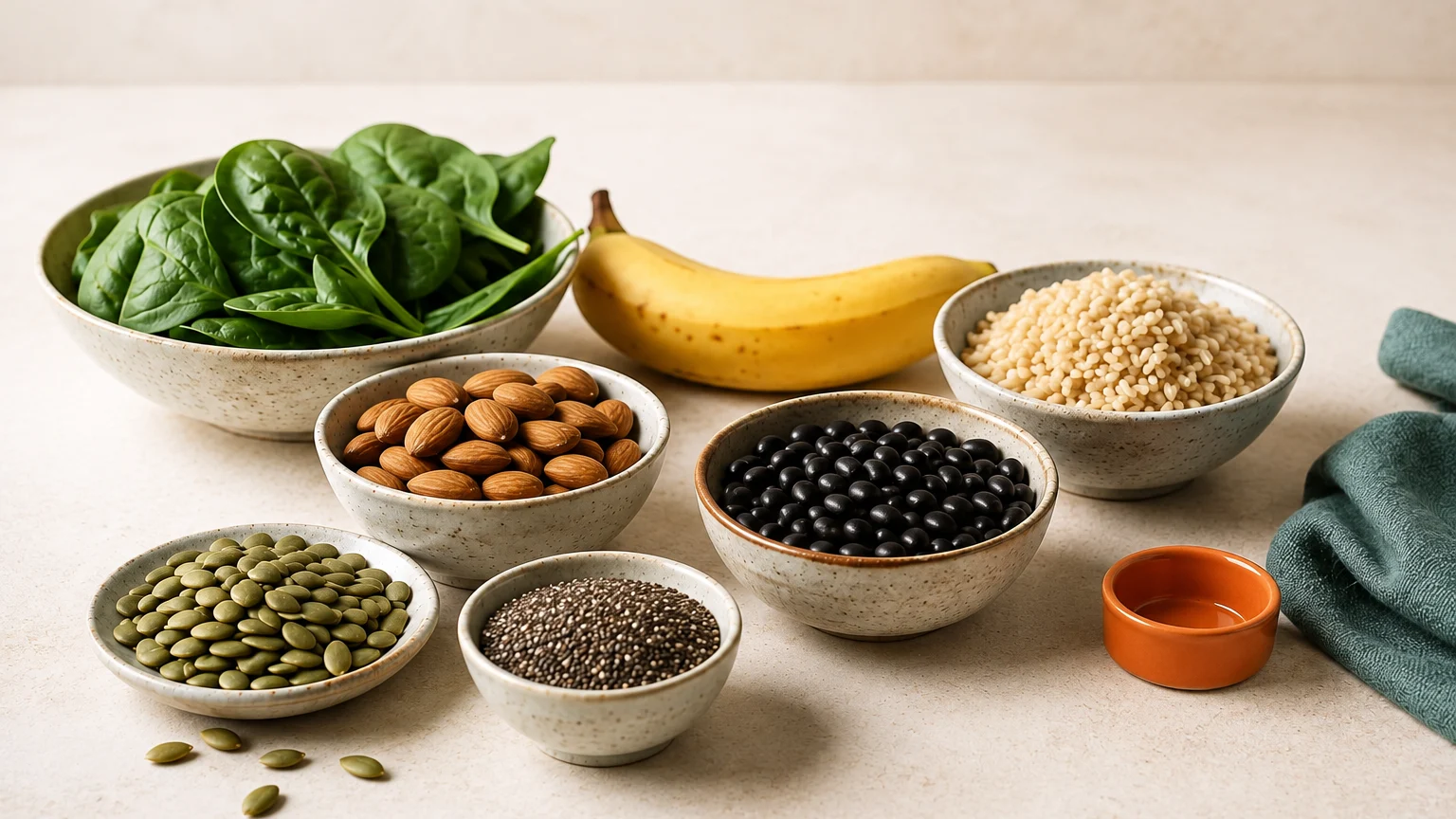
For most generally healthy adults, food remains the starting point. Vegetables, fruit, wholegrains, legumes, nuts, seeds, eggs, seafood, lean meats and dairy or suitable alternatives contribute different nutrients. Fortified foods may be important when animal foods or dairy are excluded.
Labels such as “vitamins for women” describe a target customer, not an assessment. Dietary supplements can be useful, but the woman taking one still needs a clear purpose, a safe amount and a review point.
“Good for energy” is not a diagnosis. Tiredness and fatigue can relate to sleep, stress, iron deficiency, B vitamin status, thyroid disease, infection, mood, medicines and many other factors. A general product marketed for daily energy can obscure that distinction. It is better to investigate persistent symptoms than to assume vitamins can correct them.
Iron and the menstrual cycle
People who menstruate can have higher iron needs, particularly with heavy periods. Iron supports haemoglobin and normal oxygen transport, but symptoms such as fatigue, breathlessness and poor concentration are not specific to low iron. Iron studies and clinical context help distinguish deficiency from other causes.[2]
Do not take high-dose iron simply because you are a woman or feel tired. It can cause gastrointestinal effects, interact with medicines and be harmful when iron is not low. If deficiency is confirmed, the clinician should consider blood loss, diet, absorption and follow-up rather than treating the laboratory number alone.
Vitamin B12, vegan diets and B vitamins
Vitamin B12 is needed for blood and neurological function. Healthdirect identifies vegan eating, older age, pernicious anaemia, metformin or proton-pump-inhibitor use and bariatric surgery among risk contexts. Australian guidance advises people following a vegan diet to use a reliable B12 source, including supplementation.[3]
That specific need does not make every B complex appropriate. Check total B6 across multivitamins, magnesium, zinc and stress formulas. The TGA warns that supplementary vitamin B6 can cause peripheral neuropathy and that risk can arise when several products are combined.[4] Tingling, burning or numbness requires prompt review and a check of every label.
Vitamin C supports normal physiology and helps non-haem iron absorption, but routine high-dose vitamin supplements are not a substitute for fruit and vegetables. More is not automatically better.
Folic acid, iodine and pregnancy
Pregnancy is the clearest example of life-stage-specific nutrition support. Current Australian guidance recommends folic acid and iodine around pregnancy, while some people need other support based on diet, blood results and clinical risk.[5] Timing matters because folate is relevant before conception and early in pregnancy.
Do not assume a general women’s multivitamin is a suitable prenatal product. Amounts vary, and pregnancy changes the safety context for vitamin A forms, herbs and other ingredients. Thyroid conditions can change iodine advice, and higher folic-acid amounts are reserved for particular risks under medical guidance. Iron and vitamin D are assessed rather than automatically escalated for everyone.
If pregnancy is possible, planned or established, use the current Pregnancy, Birth and Baby guidance and confirm the exact product with a GP, midwife, pharmacist or Accredited Practising Dietitian.
Menopause, calcium, vitamin D and bone health
Bone loss accelerates for some women after menopause, but bone health is not a calcium tablet alone. Adequate dietary calcium, vitamin D, protein, weight-bearing activity, strength work, falls risk, smoking, alcohol, medicines and medical conditions all matter.[6]
Food sources are generally preferred for calcium. A clinician may suggest supplementation when intake cannot meet needs or when bone-risk assessment supports it. Vitamin D supports calcium absorption, but the need for testing or supplementation depends on sun exposure, skin coverage, location, age and medical risk. High-dose vitamin D should not be used as a general menopause strategy.
Supplements for menopause symptoms are a separate question. A product promoted for hot flushes or sleep should not be presented as interchangeable with nutrients used for bone health, and herbal ingredients can have interactions or contraindications.
Omega-3, magnesium and multivitamins
Omega-3 fatty acids are found in fish and seafood; plant foods provide shorter-chain forms, and algae-derived options can suit vegan diets. A supplement may be considered when dietary intake is limited or for a specific clinician-led purpose, but it is not a universal requirement for women. Check EPA and DHA amounts rather than relying on the front-label fish-oil total, and discuss bleeding risk or surgery.
Magnesium contributes to normal muscle function and many metabolic processes. A shortfall is not established by cramps, poor sleep or stress alone. Supplemental forms can cause diarrhoea, and kidney impairment changes safety. Do not interpret a marketing claim about muscle health as proof that a high amount is needed.
A multivitamin can be practical when intake is restricted or several modest gaps are likely. It is not automatic chronic-disease insurance. A 2024 analysis of three large prospective cohorts found no lower mortality among regular multivitamin users; observational design means it cannot answer every individual indication.[7]
Good supplements for women require a defined purpose
A good starting review looks at meals, fortified foods, alcohol, appetite, menstrual bleeding, gastrointestinal symptoms, sun exposure and every medicine. It should also ask whether hormonal change, pregnancy plans, menopause or a restrictive diet alters the likely need. This is more informative than choosing nutrients for women from a symptom quiz.
Testing should be targeted. A clinician might investigate iron or vitamin B12 when history supports it, or vitamin D status where deficiency risk is meaningful. Older women and postmenopausal women may need a broader bone and falls-risk review rather than isolated calcium and vitamin testing. A result must be interpreted with symptoms, diet and the reason it was ordered.
The plan can then define the nutrient, food changes, supplement amount, duration and follow-up. Good follow-up also records what success means. That might be correction of a laboratory result or adequate intake, not a vague promise about immunity, skin, energy levels or reproductive health. If no gap or specific indication is found, the safest decision may be not to add a product.
How to compare vitamins and supplements safely
Read the back label, not only the promise on the front:
- Write down every medicine and supplement, including powders and drinks.
- Compare repeated nutrients across products, especially iron, vitamin A, vitamin D, zinc, selenium and pyridoxine.
- Look for an AUST L, AUST L(A) or AUST R number. The TGA explains that most listed complementary medicines are not individually evaluated for efficacy before sale.[8]
- Check pregnancy, breastfeeding, medicine, surgery, allergy and medical-condition warnings.
- Prefer the simplest product that matches the defined need; “women’s” does not guarantee an appropriate amount.
- Set a review point. If the reason was a deficiency, confirm response and investigate why it occurred.
Nutrition Market’s adaptive women’s-multivitamin feed is suppressed on this guide while no product passes every stock, COGS, margin, formulation and compliance rule. No unavailable or unsuitable item will be substituted automatically.
Questions about women’s supplements
What supplements should a woman take daily?
There is no universal daily list for every woman. Folate and iodine have specific Australian recommendations around pregnancy, vitamin B12 is important for vegan diets, and confirmed deficiencies may need targeted care. Other choices depend on food intake, life stage, health conditions, medicines and test results.
What supplements should I take daily as a female?
Start with the reason, not sex alone. Review your diet, stage of life, symptoms, medicines and duplication risk with a GP, pharmacist or registered dietitian. A daily supplement is reasonable only when its purpose, amount, duration and review plan are clear.
What are the best supplements to take for a woman?
The right options are matched to a genuine need and safe for that person. Examples include prescribed deficiency correction, reliable B12 for a vegan diet or pregnancy-specific folate and iodine. A general ranking cannot account for menstruation, pregnancy, menopause, absorption, medicines or disease.
What are the big 3 supplements?
There is no recognised “big 3” for women. Calcium, vitamin D and magnesium are sometimes grouped in marketing, but they are not automatically required and do not cover iron, B12 or pregnancy needs. Choose by evidence and individual context, not a catchphrase.
References
- Australian Government Department of Health and Aged Care. Australian Dietary Guidelines. Accessed 19 July 2026.
- Healthdirect Australia. Iron studies blood test. Accessed 19 July 2026.
- Healthdirect Australia. Vitamin B deficiency. Accessed 19 July 2026.
- Therapeutic Goods Administration. Peripheral neuropathy with supplementary vitamin B6. Updated 25 February 2026.
- Pregnancy, Birth and Baby. Vitamins and supplements during pregnancy. Accessed 19 July 2026.
- Healthdirect Australia. Osteopenia. Accessed 19 July 2026.
- Loftfield E, et al. Multivitamin Use and Mortality Risk in 3 Prospective US Cohorts. JAMA Network Open. 2024;7(6):e2418729. doi:10.1001/jamanetworkopen.2024.18729.
- Therapeutic Goods Administration. Understanding Complementary Medicines. 16 May 2025.